Ongoing tensions in the Middle East continue to place global air freight under pressure. Limited capacity, adjusted routings and rising costs are causing disruptions across international supply chains. Below you will find the latest developments and the impact on your shipments.
DSV is closely monitoring developments in the Middle East and continuously aligns its operations with airlines, partners and local authorities. The safety of our employees and the continuity of our operations and customers’ supply chains remain our top priorities.
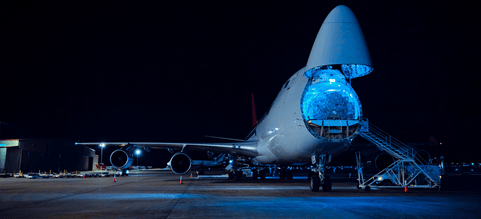
Airlines are currently operating with significantly reduced capacity. Freight services are only partially maintained, primarily for repositioning, cargo and repatriation flights. At the same time, a few commercial flights remain suspended, keeping available capacity extremely limited.
The impact of the situation is now visible worldwide. Traditional routes via the Middle East are being avoided, causing cargo flows to shift towards alternative hubs:
This shift is placing additional pressure on corridors that were previously less congested.
The current situation is having a direct impact on both capacity and pricing across the global air freight network:
Market developments indicate that rates on certain routes may increase rapidly, with strong week-on-week rises driven by limited capacity.
In addition, structural factors are continuing to exert pressure on rates, such as reduced capacity at key hubs, rising energy prices and increasing risk premiums.
In the coming period, you should consider:
As the situation continues to evolve, flight schedules and routes may change at short notice.
To minimise the impact on your supply chain, DSV supports you with:
Do you have shipments planned or in transit and require advice on the best transport options? Please contact your regular DSV representative.
We will continue to monitor the situation closely and keep you informed of any new developments.
Our experts are ready to help. Get in touch and we'll find the solution you need.