
February 2025
Updates, developments and innovations
Road Quarterly Market Update
Introduction
In this first market update of 2025, we provide an overview of the latest market developments affecting road transport across Europe. We take a look back at key trends from Q4 2024 and January 2025, including economic trends, bankruptcies in the industry, driver shortages and more. We also revisit the status on ETS and road tolls, which continue to significantly influence road transport costs.
Additionally, we explore DSV's sustainability efforts, including renewable energy initiatives and developing charging infrastructure.



General economic development: Euro area
In the Euro area:
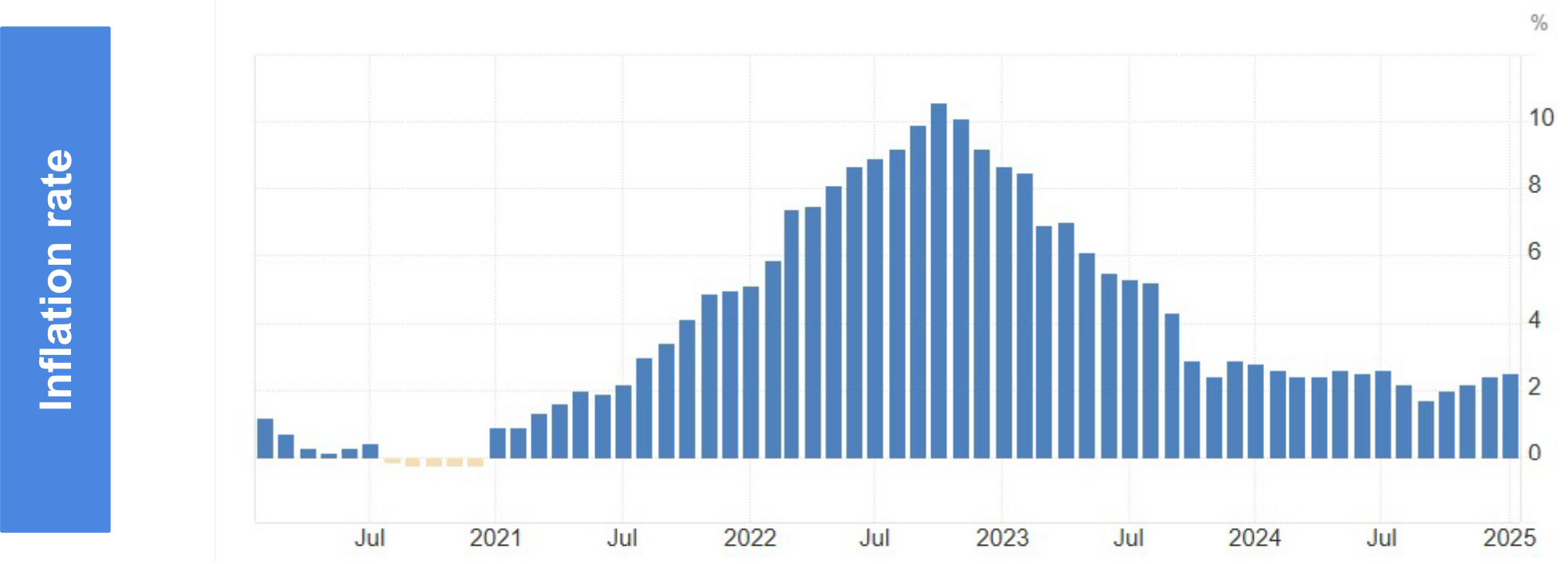
- The annual inflation rate in the Euro area edged up to 2.5% in January 2025 from 2.4% in December, slightly above market expectations of 2.4%, shown in a preliminary estimate.
- This was the highest inflation rate since July 2024, driven primarily by a sharp acceleration in energy costs (1.8% vs. 0.1% in December).
- Meanwhile, inflation for non-energy industrial goods remained steady at 0.5%, while price increases slowed for both services (3.9% vs. 4.0%) and food, alcohol, and tobacco (2.3% vs. 2.6%).
- The core inflation rate, which excludes volatile food and energy prices, remained unchanged at 2.7% for the fifth consecutive month, slightly above market forecasts of 2.6% but still at its lowest level since early 2022.
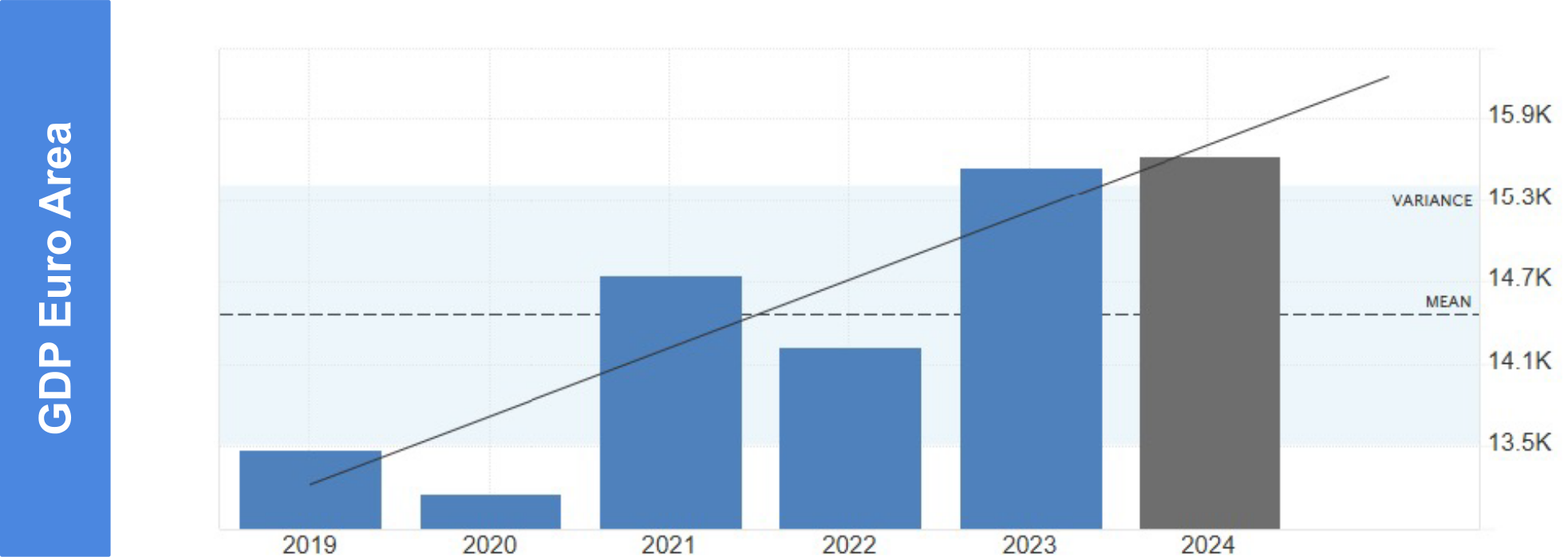
- Euro area GDP growth rate unexpectedly stalled in Q4 2024, marking its weakest performance of the year, following a 0.4% growth in Q3 and an anticipated 0.1% expansion, according to preliminary estimates. Source: Eurostat
Transport capacity and fuel prices



Bankruptcies, driver shortages and NCTS
European transport bankruptcies
The combination of declining revenues and rising costs has put pressure on the working capital of transport companies.
- In France, 1,339 transport companies went bankrupt in a year (+37.8%), with 939 facing liquidation, mainly small firms with under 10 employees.
- Belgium saw a 50% increase in bankruptcies, Germany’s transport failure rate is double the business average, and nearly 500 UK carriers closed in 2023, with a 10% rise expected in 2024.
- Poland’s transport sector, contributing 7% of GDP and 6.5% of jobs, struggles with falling demand, rising costs and 30,000 unfilled driver positions.
- Non-EU drivers make up 60% of Poland’s international transport workforce, but the war in Ukraine has reduced recruitment, while also increasing competition from Ukrainian carriers.
- The EU extended its agreement allowing Ukrainian transporters easier access until 2025, prompting Poland to introduce stricter monitoring (SENT system) from November 2024. Source: upply
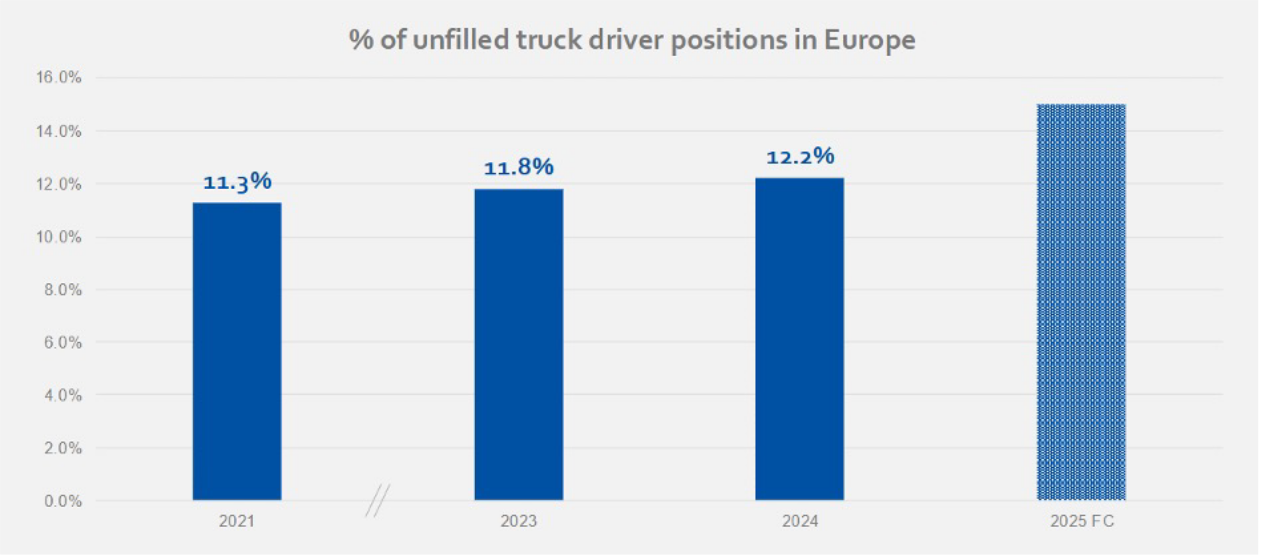
Driver shortages increase into the new year
In Europe, driver shortage growth slowed in 2024 due to weak demand, but is expected to accelerate again in 2025
ETS and road tolls
ETS expansion now in effect:
As of 2025, the EU Emissions Trading System (ETS) requires shipping companies to cover 70% of their emissions with allowances. ETS-related charges are passed on to customers and updated monthly based on ferry usage and emissions.
Adapting to regulatory changes:
Countries are implementing and updating toll systems and regulations more frequently and with shorter notice, requiring transport operators to adapt quickly. The increase in carbon pricing is driving up transport costs, encouraging fuel efficiency and alternative solutions. Differences in national tolls and emission rules add complexity, making careful planning and compliance essential.
At DSV, we are closely monitoring these developments. We continue to guide our customers and partners through these challenges to the best of our ability.
Note: Road taxes or similar imposed by governments impacts the total transportation cost, beyond the control of DSV.
Status on road tolls in Europe
*Map illustrating most recent and current tolling schemes, as well as future plans. The dates reflect when latest changes take effect.
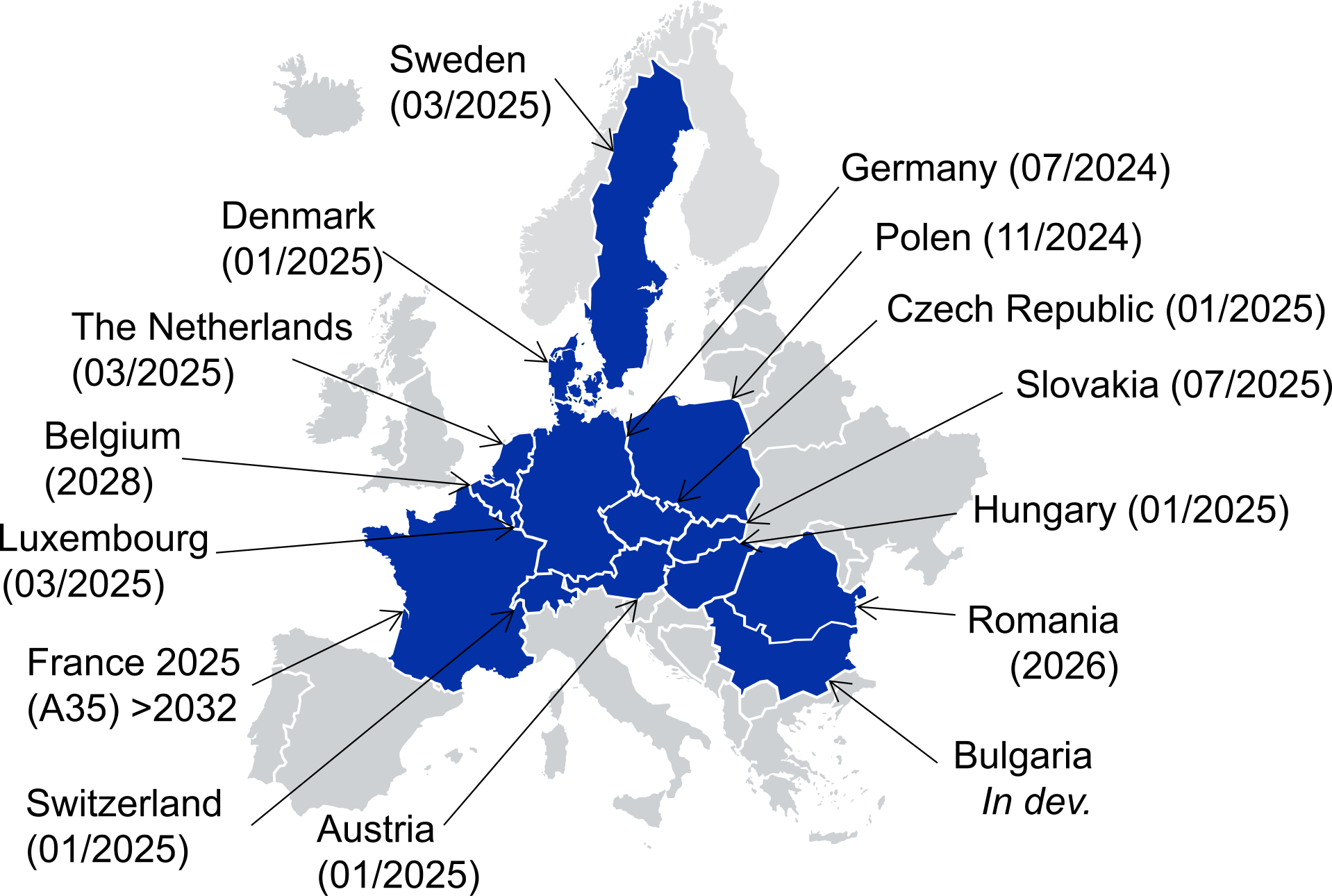
Source: IRU
Renewable energy to enable decarbonisation
This important initiative goes beyond just powering our own operations; it seeks to create a sustainable energy approach for both DSV and our customers, especially in sectors like road transportation. By doing this, we can aid in the electrification of road haulage services, which is essential for improving energy security and for our decarbonisation strategy.
Brian Ejsing, Group COO
With our state-of-the-art renewable energy assets, DSV is taking major steps toward achieving net-zero CO
2 emissions by 2050.
By installing solar panels on our facility rooftops, we are reducing scope 1 and 2 emissions. Additional electricity will be fed into the grid, stored in battery energy storage systems (BESS), and used to charge partner and subcontractor vehicles, helping to lower scope 3 emissions.
DSV renewable energy asset projects
- Landskrona, Sweden 14 MWp rooftop solar PV park, corresponding to the energy needs of roughly 1,400 households for a year. Read more here.
- Horsens, Denmark 36 MWp rooftop solar PV park and 9 MWh BESS.
- Four additional sites DSV is developing four new sites across Europe that are set to become operational in the coming years.