In 2025, thanks to an agreement between Hamas and Israel and announcements by Houthi rebels to cease attacks on merchant ships, a chance for long-awaited stabilization in the Red Sea region has emerged. This, in turn, provides hope for unblocking the Suez Canal, through which goods worth over 9 billion USD flowed daily. However, is the prospect of clearing this route exclusively positive?
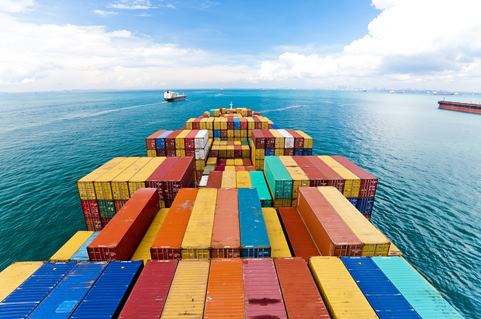
For decades, the Suez Canal was one of the most important routes in sea freight, enabling faster transport of goods between Asia and Europe. The situation changed with the Houthi rebel attacks ongoing since November 2023, which forced shipowners to reorganize routes. Shipowners rerouted container ships to routes circumnavigating Africa via the Cape of Good Hope.
Data from the US Defense Intelligence Agency clearly illustrates the scale of these changes: from November 1, 2023, to mid-June 2024, container transport traffic to Europe via the Suez Canal dropped by approximately 90% and remains at a low level to this day.
Uncertain ceasefire
Some hope for unblocking the Canal was provided by information about the conclusion of a ceasefire agreement between Hamas and Israel, which is a significant step toward stabilizing the region. In response to the agreement, Houthi rebels announced they would suspend attacks on merchant ships; however, it should be remembered that this is only a declaration, not a guarantee of lasting peace.
The Suez Canal authorities are taking intensive actions to restore shipping. At the beginning of November, Admiral Ossama Rabiee, Chairman of the Suez Canal Authority, met with representatives of the 20 largest shipowners, presenting the situation in the Red Sea and providing assurances of improved security. Financial incentives in the form of discounts are also regularly offered.
Shipowners still do not want to bear the high risk associated with freight through the Suez Canal — a single container ship is an asset worth hundreds of millions of euros, not accounting for the value of the cargo itself. Currently, apart from local feeder connections, only one year-round service operates between Asia and Europe, and few carriers decide to use this route. None of the large Asian shipowners have directed their vessels through Suez this year. The route is used sporadically, e.g., on return voyages to make up for delays in European ports, but it involves significant risk - as confirmed by the case of a shipowner whose vessels needed a naval escort during the passage." - says Michał Madej, Sea Freight Import Manager
at DSV - Global Transport and Logistics.
Stability as a priority for shipowners
In the assessment of the DSV sea freight analyst team, in the short and medium term, the actions of the Suez Canal authorities will not bring the expected results. The operation of reorganizing routes again would require enormous organizational effort and involve high costs. Especially since, after two years of operating the route around Africa via the Cape of Good Hope, economies and enterprises have adapted to the extended transit times.
Predictability is the foundation for the sea freight sector. Implementing the changes in current operations necessary to restart the Suez route is too risky because stabilization in the Red Sea region is too fragile. Potential benefits in shorter transit times or reduced CO2 emissions are not yet sufficient. A key issue is the reduction of insurance policy costs, which will not happen without a permanent reduction in incidents. – says Michał Madej.
If the agreement holds in the long term, the current consensus regarding avoiding Red Sea routes may change.
While a specific date for the return of shipping through the Suez Canal cannot be indicated, in my opinion, once one major shipowner or alliance resumes regular service via Suez, others will follow to remain competitive. No one can afford to offer a transit time 2–3 weeks longer than the competition, meaning all players will start recalculating the risks and will be confronted with the challenge of reconfiguring their shipping routes to adjust to the market conditions. In such a scenario, we will deal with a domino effect and the gradual return of most services to the Suez Canal. – explains Madej.
The first signal of a possible breakthrough may be the announcement in recent days by one of the shipowners regarding the restoration of weekly routing on the Europe–Asia route for one of its services at the turn of the year. However, the route from Asia to Europe remains unchanged for now, as does the position of the other shipping lines.
Faster transit at the cost of possible congestions
Restoring regular connections through the Suez Canal would involve significant shortening of transit times, as well as major challenges for shipowners, the port sector, and end customers.
In the first weeks following the resumption of shipping, we would likely experience a significant increase in the number of containers arriving at European ports, which are already struggling with congestions. At some point, a situation could arise in which vessels using the shorter route as well as those circumnavigating Africa would call at the port. – says Michał Madej, DSV - The issue of port workers, who regularly take strike action remains an important risk factor. Under conditions of increased shipments, the escalation of such actions cannot be ruled out.
Such a situation could lead to an increase in rates throughout the entire logistics chain. This includes the costs of road and rail transport to and from ports, the extension of waiting times for customs clearance necessary for the release of imported goods for free circulation, and finally, warehousing. A particularly significant challenge in this scenario would be the potential increase in storage demand. Already today, in key ports, yard occupancy levels are high - in Hamburg, they have reached 70–80% in recent weeks, while in Rotterdam and Antwerp, they have periodically hit as much as 80–90%. The backlog of incoming goods would exacerbate this situation. This is especially true as a portion of the cargo must remain in the port awaiting transshipment to so-called feeder vessels - smaller vessels that transport goods from large ports acting as hubs to smaller local terminals.
How to navigate uncertain waters
The return to the Suez Canal will require importers to comprehensively redesign their supply chains. Cooperation with a large logistics operator can provide tools to mitigate the shock of significant overload.
Large logistics operators, in a situation of significant congestion which should be expected following the restoration of shipping via the Red Sea, possess the tools necessary to mitigate consequences of the shock. Their scale of operations enables the minimization of cost increases. Elements worth paying attention to when looking for a potential partner for cooperation include the size of the carrier base, the size and location of the warehouse space at the company's disposal, and the availability of customs services such as a Temporary Storage Warehouse - summarizes Michał Madej, Sea Freight Import Manager at DSV - Global Transport and Logistics. - It is worth preparing for such a situation in advance, because in the face of long-term stabilization of the political situation in the Red Sea region, the question will not be whether container shipping will return to the Suez Canal route, but when and how abrupt this change will be.
Nasi eksperci są gotowi do pomocy.
Skontaktuj się z nami, a znajdziemy potrzebne Ci rozwiązanie.